
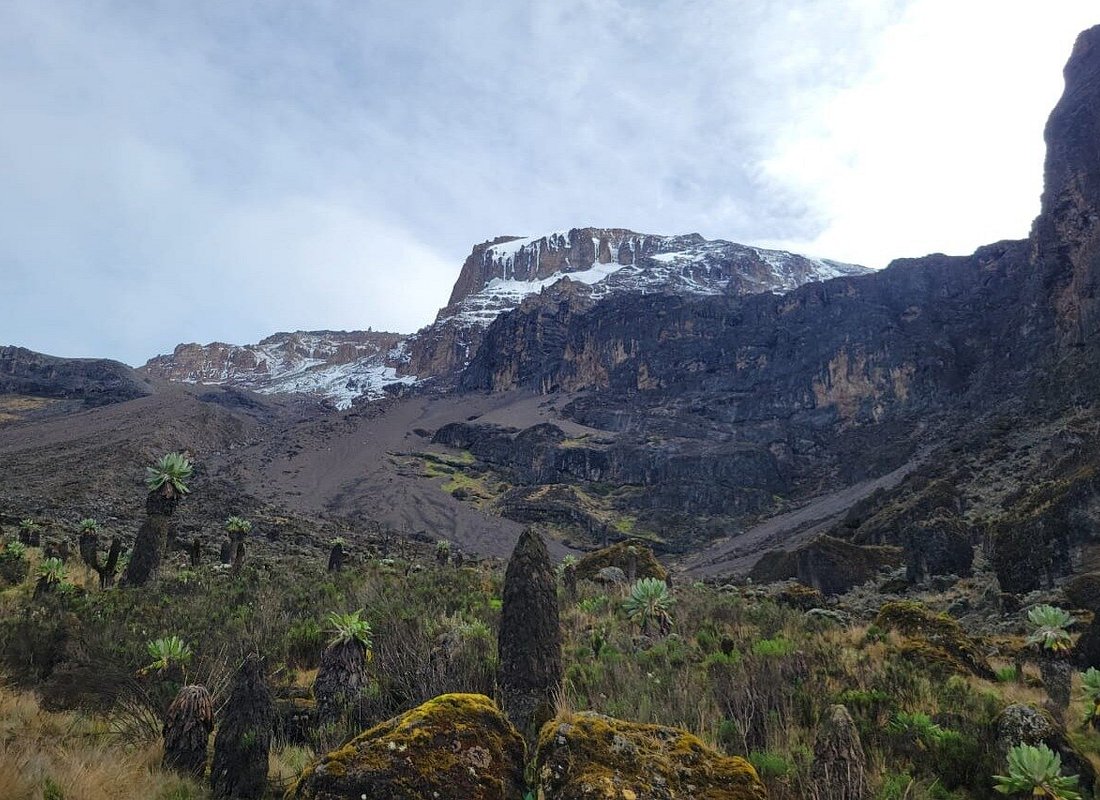
Summit Night on Kilimanjaro: From Barafu to Uhuru Peak
A practical look at the toughest and most rewarding stage of a Kilimanjaro climb: the overnight journey to Uhuru Peak.
Why Summit Night Is Special
For many trekkers, summit night is the moment they imagine long before arriving in Tanzania. After several days of walking through forests, moorland, and high alpine terrain, the final climb toward Uhuru Peak takes place in darkness.
This stage is different from the other trekking days. Temperatures are much colder, the altitude is higher, and fatigue has accumulated. The psychological challenge can be as important as the physical effort.
Preparing at High Camp
Before the summit attempt, trekkers normally spend time at a high camp such as Barafu on Machame or Lemosho itineraries, or Kibo on Marangu.
The afternoon is usually quiet. The priority is to eat, organize summit clothing, prepare headlamps, fill water bottles, and rest.
Trying to do unnecessary activities at high camp can waste energy. A calm preparation routine is valuable.
Why Start at Night?
Starting after midnight allows trekkers to reach higher points around sunrise. It also provides a chance to experience the mountain at its most dramatic, with stars visible above the slopes when conditions are clear.
The timing is also practical because the highest sections can become more challenging later in the day if weather changes.
The First Hours
The initial section can feel surprisingly slow. Trekkers move in a steady line, often taking small steps on steep terrain.
This is where pacing matters. The goal is to conserve energy for several hours rather than spending too much effort early.
Short breaks are useful, but long stops can allow the body to cool rapidly. Guides normally manage the rhythm according to the group's condition.
Cold and Wind
Near the summit, cold becomes a serious factor. Gloves, warm socks, head protection, an insulated jacket, and waterproof outer layers can help protect exposed areas.
Wind can increase the feeling of cold considerably. Trekkers should not wait until they are uncomfortable before adding layers.
Stella Point and the Crater Rim
Depending on the route, trekkers may reach a high point on the crater rim before continuing toward Uhuru Peak.
This can be a major psychological milestone. The horizon begins to brighten, and many trekkers realize that the summit is within reach.
Even so, fatigue remains high, and the final section should be approached carefully.
Uhuru Peak
Uhuru Peak is the highest point of Mount Kilimanjaro and the highest point in Africa. Reaching the summit represents the culmination of days of steady effort.
The summit moment itself is usually short. Trekkers take photographs, celebrate, look across the surrounding landscape, and then prepare to leave.
Remaining at extreme altitude longer than necessary is generally not the goal.
The Descent
The descent begins after the summit celebration. Going downhill may seem easier, but it can still be physically demanding.
Loose gravel and steep sections require concentration, especially when legs are tired. Good footwear and careful movement are important.
Depending on the route and schedule, trekkers may return to a high camp for a short rest before descending further.
Food and Hydration
During summit night, many trekkers prefer small, easy-to-eat snacks rather than a large meal. Warm drinks can also be comforting in the cold.
Hydration should remain regular, but trekkers should follow the guide's advice because managing fluid intake at high elevation can be different from an ordinary hike.
Mental Strength
The summit climb can become mentally demanding because progress feels slow. A useful strategy is to focus on the next landmark rather than the entire distance remaining.
Step by step, the trail becomes a sequence of manageable sections. Encouragement from the guide and group can also help.
What Makes a Successful Summit?
A successful summit is not only reaching the top. It is reaching the top responsibly and returning safely.
That means listening to your guides, responding honestly to symptoms, accepting the possibility of changing plans when necessary, and understanding that mountain conditions are not fully under human control.
Final Thoughts
Summit night is one of the defining experiences of a Kilimanjaro climb. The darkness, cold, silence, sunrise, and final approach create memories that stay with trekkers long after they leave Tanzania.
Preparation begins days earlier through route choice, acclimatization, nutrition, rest, and pacing. By the time you start the summit attempt, every small decision matters.
Approach the mountain with patience, respect, and a strong support team, and the journey toward Uhuru Peak can become an unforgettable chapter in your travel story.